The U.S. Supreme Court heard oral arguments Wednesday in a Louisiana redistricting case that could determine the future of race-based congressional maps.
During the proceedings, Justice Ketanji Brown Jackson drew criticism after making a comparison between black voters and disabled individuals while questioning attorneys about voting access, as reported by The Gateway Pundit.
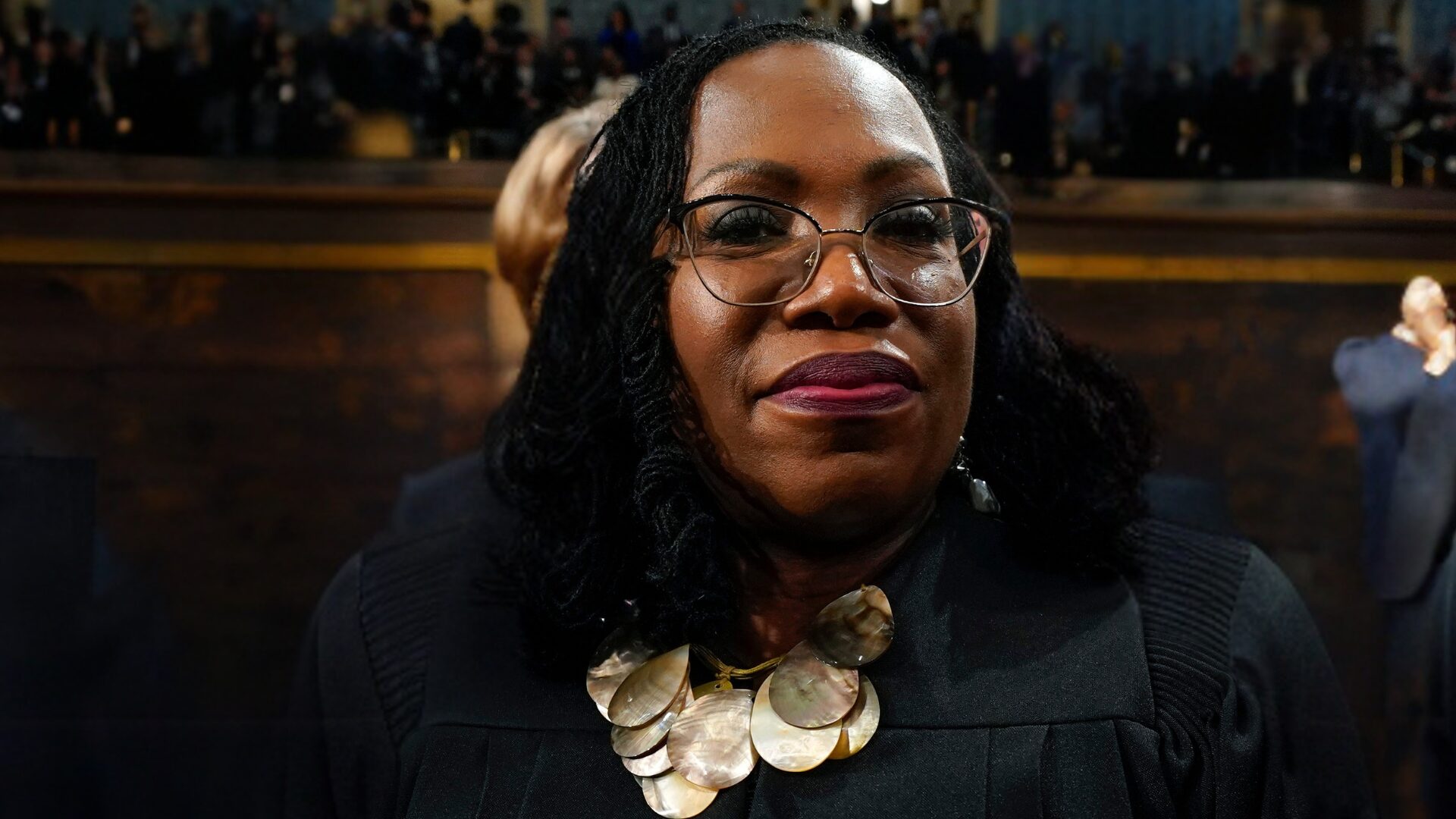
The case, State of Louisiana v. Phillip Callais—along with the related Press Robinson v. Phillip Callais—centers on whether Louisiana lawmakers violated the Voting Rights Act by redrawing its congressional map to include a second “majority-minority” district.
Here's What They're Not Telling You About Your Retirement
The map was created after federal judges ruled the state needed more black representation in Congress.
President Donald Trump’s Department of Justice, represented by Assistant Attorney General for the Civil Rights Division Harmeet Dhillon and Solicitor General John Sauer, argued that race-based congressional districts violate the Constitution’s equal protection clause.
“Today at SCOTUS, the [DOJ Civil Rights Division] told the Justices that Section 2 of the Voting Rights Act cannot constitutionally require race-predominant districting,” Dhillon wrote on X last month.
Today at SCOTUS, the @CivilRights told the Justices that Section 2 of the Voting Rights Act cannot constitutionally require race-predominant districting! pic.twitter.com/6uWrzNs9Eq
— AAGHarmeetDhillon (@AAGDhillon) September 25, 2025
During questioning, Justice Jackson invoked the Americans with Disabilities Act (ADA) to draw an analogy between black voters and disabled individuals.
FREE Gun Law Map: Laws Don't Pause During Social Unrest
“They don’t have equal access to the voting system. They’re disabled,” Jackson said. The remark was made in the context of whether certain voters face systemic barriers to electing candidates of their choice.
Ketanji Brown Jackson literally and directly compares black people not electing their preferred candidates to disabled people not being able to enter buildings
"They don't have equal access to the voting system. They're disabled." pic.twitter.com/aCJXeBwHTl — Breitbart News (@BreitbartNews) October 15, 2025
The Louisiana case challenges the long-standing use of race as a central factor in redistricting decisions. The state’s original congressional map contained one majority-black district out of six, but after a series of federal court rulings, legislators added a second.
State officials appealed, arguing that the change relied solely on racial composition rather than race-neutral principles.
The Department of Justice’s brief outlined several key points:
Plaintiffs must prove that a proposed majority-minority district is “superior” to the existing map under race-neutral standards rather than assuming discrimination without evidence.
Race and political affiliation must be separated in voting analyses to prevent partisan voting patterns from being mischaracterized as racial discrimination.
Current conditions, such as high minority voter turnout and record levels of black representation in Congress, undermine claims of systemic suppression.
Dhillon’s filing also referenced the 2013 Supreme Court decision Shelby County v. Holder, which found that outdated federal oversight provisions of the Voting Rights Act were unconstitutional.
The government’s position is that similar reasoning should now apply to redistricting cases that use race as a deciding factor.
Justice Jackson’s remarks quickly drew attention online, with critics arguing that her comparison trivialized both racial and disability issues.
The Court’s decision, expected later this term, could have significant implications for how states draw their congressional districts and how courts evaluate claims of racial bias in voting laws.
Join the Discussion
COMMENTS POLICY: We have no tolerance for messages of violence, racism, vulgarity, obscenity or other such discourteous behavior. Thank you for contributing to a respectful and useful online dialogue.