Supreme Court Justice Sonia Sotomayor, at age 70, has expressed her intention to remain on the bench, dismissing the idea of stepping down to make way for a younger liberal successor or possibly Kamala Harris, according to The Wall Street Journal.
They call it the “Democratic” party, but it’s not. They rigged 2016 for Hillary to beat Bernie. They got Klobuchar & Buttigieg to quit for Biden in 2020. They got Biden to quit for Kamala in 2024. Now they’re trying to get Sotomayor to quit for Kamala. It’s an authoritarian party pic.twitter.com/yVdc8dMrwj
— Michael Shellenberger (@shellenberger) November 9, 2024
This decision comes as liberals on the court find themselves in the minority, outnumbered by the court's six conservative justices following recent high-profile rulings, including the overturning of Roe v. Wade, which returned decisions on abortion rights to individual states.
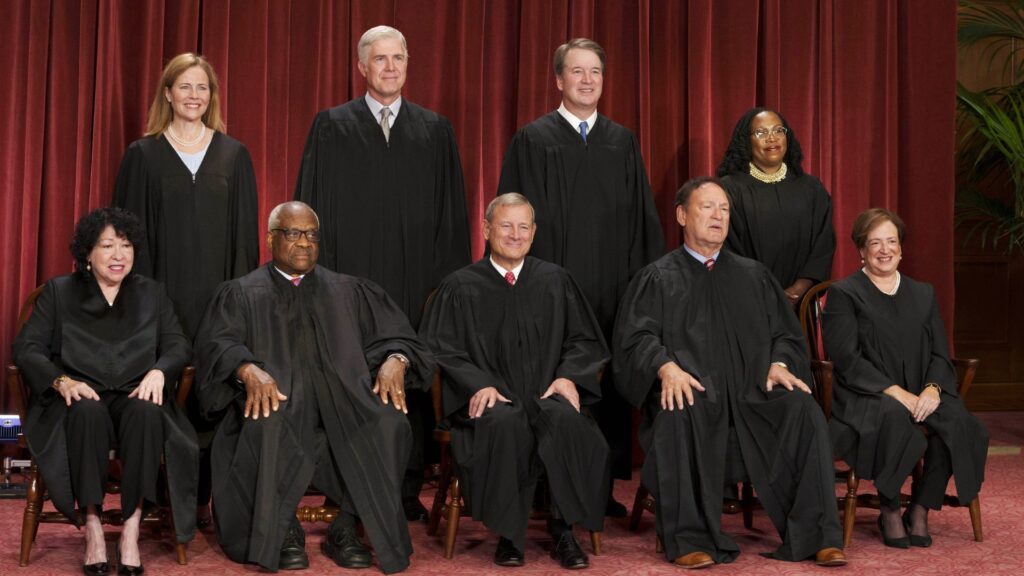
An anonymous source close to Sotomayor, speaking to The Journal, stated, “This is no time to lose her important voice on the court. She just turned 70 and takes better care of herself than anyone I know.”
Here's What They're Not Telling You About Your Retirement
Despite pressure from some liberals who would prefer Sotomayor to retire sooner rather than later, she appears committed to staying on the bench for the foreseeable future.
HAHAHAHA now they want Biden to put Harris on the Supreme Court before he leaves: pic.twitter.com/2KuWE5L1wm
— End Wokeness (@EndWokeness) November 8, 2024
Recent calls for Sotomayor’s retirement are reminiscent of the urging directed at Justice Ruth Bader Ginsburg to step down during the Obama administration.
Ginsburg ultimately chose not to resign, passing away at age 87 in 2020. Her decision not to retire allowed former President Donald Trump to nominate Justice Amy Coney Barrett, further solidifying the conservative majority on the court.
Ginsburg’s passing and Barrett’s appointment highlighted the influence that timing and presidential appointments have on the ideological balance of the Supreme Court.
FREE Gun Law Map: Laws Don't Pause During Social Unrest
David Dayen, executive editor of the liberal magazine The American Prospect, referenced Ginsburg's case and urged Sotomayor to retire, noting the political stakes. “This would probably be a good day for Sotomayor to retire,” he wrote.
This would probably be a good day for Sotomayor to retire
— David Dayen (@ddayen) November 6, 2024
Legal scholars have also weighed in on the situation. Erwin Chemerinsky, dean of the University of California, Berkeley, School of Law, previously encouraged Ginsburg to retire during the Obama administration, and he sees the current circumstances as even more complex.
In a statement to The Journal, he noted, “It is far more uncertain that the Democrats could confirm a successor than in summer 2014.” He pointed out that Sotomayor is now 70, a decade younger than Ginsburg was when he first suggested her retirement.
The current political landscape and the composition of the Senate add another layer of uncertainty for Democrats who may hope to see a liberal successor.
Bernie Sanders is asked if 70 year old Sonia Sotomayor should step down so Biden can appoint a younger person to the Supreme Court. His answer is simple.pic.twitter.com/4iSRj81f3q
— Defiant L’s (@DefiantLs) November 10, 2024
With a conservative majority in the Senate and Republican control of the presidency, the possibility of confirming a liberal justice is increasingly unlikely, and Democrats fear missing an opportunity to appoint a younger liberal voice to the bench.
Sotomayor, appointed by President Barack Obama in 2009, is the first Hispanic and third woman to serve on the Supreme Court.
Known for her strong stances on issues related to social justice, immigration, and voting rights, she is a key liberal voice on the court, often writing dissenting opinions on cases with significant social and political implications.
Her decision to stay on the court signals her commitment to influencing judicial discourse on these issues as long as she is able.
The debate over Sotomayor’s tenure reflects broader concerns among liberals over the future direction of the Supreme Court and the limited ability of the minority bloc to counter the decisions of the conservative majority.
Join the Discussion
COMMENTS POLICY: We have no tolerance for messages of violence, racism, vulgarity, obscenity or other such discourteous behavior. Thank you for contributing to a respectful and useful online dialogue.