Comedian and talk show host Bill Maher sparked controversy after openly supporting Maine Democratic Senate candidate Graham Platner, despite describing his past as filled with “scary behavior.”
During his latest episode of HBO’s “Real Time,” Maher defended his decision by arguing that regaining control of the Senate is more important for Democrats than Platner’s history of scandals or his Nazi-themed tattoo, as reported [1] by The New York Post.
Maher declared that flipping the Senate is essential to counterbalance President Trump, calling it a vital opportunity for the Democratic Party.
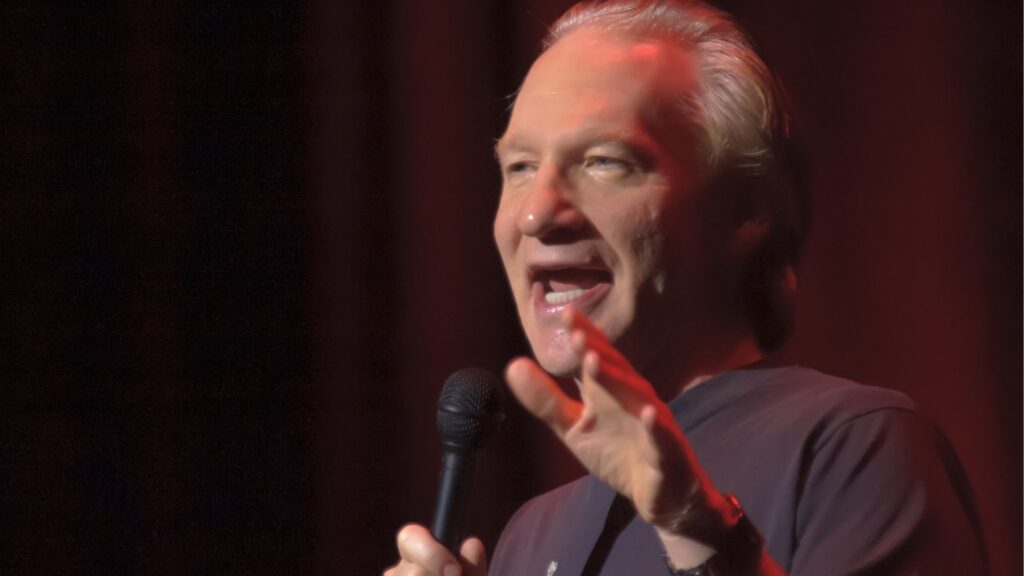
“The big story is the Democrats can likely take back the Senate in November if they win Maine,” he said. “But their local candidate, official now up there, is after the primary this week, let’s just say, a guy who has a backstory that screams, ‘Don’t ask.’”
The Maine race has gained national attention, as longtime Republican incumbent Sen. Susan Collins faces Platner in one of the most closely watched contests of the 2026 cycle. Democrats need to flip four seats to retake the chamber.
Maher explained that he still believes voters in Maine should back Platner. He listed two reasons, saying, “One, we need to restore balance in our government, and a Democratic Senate would help a lot with that.”
His second point was more cynical: “Get used to it,” he said.
“America is a country filled with a lot of broken, horribly educated, phone-addicted, sort of nutty people. And as long as we live in a representative democracy, we are always electing our reflection in the mirror.”
Maher then remarked, “I wish the tattoo was the scariest thing about Platner. It’s not. That would be his solution to a home invasion, which is to rape the home invader.”
That comment referred to a claim by Platner’s ex, Lyndsey Fifield, who told The New York Times, “He said this a lot: If anybody ever broke in here, I would rape them,” though she clarified it was “not in a sexual way, not in a gay way.”
Platner has denied her allegations of rough behavior but admitted publicly to being a bad boyfriend. He recently secured the Democratic nomination with ease.
According to the latest RealClearPolitics aggregate, Platner currently leads Collins by 6.4 percentage points, although that margin has narrowed in recent days. Collins significantly outperformed polls during her last reelection campaign in 2020.
Maher acknowledged that his understanding of Platner was still developing. “I don’t judge Graham Platner because I’m just learning who he is,” he said.
“Problem is, so is he.” He nevertheless praised Platner’s military service in the Marines, calling it a major factor that could not be discounted.
Still, Maher recited an uncomfortable list of controversies tied to Platner.
“The sexting while married, uh, scary behavior. So, say some of his exes, old posts about how he’s a communist and all cops are bastards and black people don’t tip,” he said, adding that the Nazi tattoo made the situation even stranger.
Maher concluded with a cutting line: “I mean, seriously, this guy’s whole life is the movie ‘The Hangover.’ He doesn’t need a term in the Senate. He needs a gap year in Costa Rica.”
Folks, Bill Maher on Graham Platner: “
“He doesn’t need a term in the Senate, he needs a gap year in Costa Rica. His whole life is “The Hangover”.pic.twitter.com/YsT6jvIch4 [3]
— Renee (@Renee05208714) June 13, 2026 [4]
The tattoo in question reportedly bore a resemblance to a “Death’s Head” symbol once used by the Nazi SS. Platner claimed he drunkenly got it while in Croatia in 2007 and was unaware of its meaning at the time, later having it covered up.
His campaign circulated footage showing him shirtless with the tattoo at his brother’s wedding, in front of Jewish relatives, and several Marine colleagues said they did not know it carried any Nazi connotations.
However, both Fifield and another former partner alleged he had discussed the tattoo before it became public, insisting he knew what it represented.
Despite the troubling history, Maher maintained that Platner represents a broader truth about modern politics.
In Maher’s framing, the candidate’s flaws are emblematic of a society he believes has grown “broken” and “nutty”—and electing such figures, he argued, simply mirrors that reality.