Recent actions by the Canadian Cancer Society and a group of midwives have sparked significant controversy over the use of inclusive language in healthcare. Critics argue that these changes, aimed at accommodating transgender and non-binary individuals, undermine medical accuracy and waste valuable resources.
The Canadian Cancer Society recently issued an apology for using the term “cervix” on a webpage targeted at transgender and non-binary individuals assigned female at birth. The page, intended to provide information on cervical cancer screenings for the LGBTQ+ community, acknowledged that some trans men and non-binary people are uncomfortable with the word “cervix.” As an alternative, the society suggested terms like “front hole.”
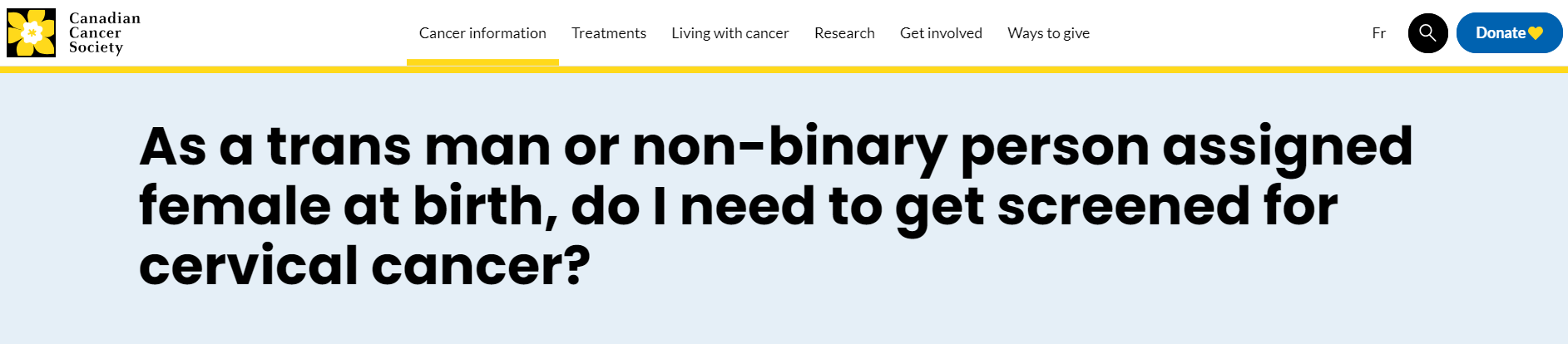
Dr. Kim Greene-Liebowitz from New York criticized the move on social media, stating, “If you can’t call body parts by their actual names, you really don’t deserve to have any role in health and medicine.” Another critic, Cecile Shaw, expressed frustration over the financial resources allocated to such content, suggesting that funds should instead be directed towards increasing the number of doctors, cancer treatments, and diagnostic imaging machines.
Here's What They're Not Telling You About Your Retirement
The term “bonus hole” has also gained traction as a substitute for “vagina” and “cervix.” One social media user highlighted the absurdity of these changes, stating, “Cervix is the proper name,” and criticized the lack of awareness among professionals.

Meanwhile, a new academic paper has called for midwives to adopt more inclusive language, suggesting terms like “human milk feeding” instead of “breastfeeding” and “reproductive health specialist” instead of “gynecologist.” The paper, authored by Professor Sally Pezaro of Coventry University and twelve other contributors, aims to move away from “sexed language,” arguing that such terms reinforce patriarchal structures and colonialism.
FREE Gun Law Map: Laws Don't Pause During Social Unrest
The guide, titled “Gender Inclusive Language in Midwifery and Perinatal Services: A Guide and Argument for Justice,” suggests replacing terms like “women” with “service users” and emphasizes that midwives should avoid words that are traditionally associated with female biology. The authors argue that this approach is essential for achieving reproductive justice and addressing the needs of all individuals who give birth, not just cisgender women.


However, the paper has been criticized for its contradictions. While it asserts that men can give birth, it advises against using terms like “men/fathers/dads” and suggests “non-gestational parents” instead. This contradictory stance has left many questioning the logic behind these recommendations.
The authors also claim that inclusive language in midwifery can help fight colonialism, a notion that has been met with skepticism. “If midwifery is indeed a feminist profession, it, therefore, follows that it should reject any re-affirmation of a European patriarchal sex binary rooted in colonialism, and fight for reproductive justice to the benefit of all who birth, the majority of whom are cisgender women,” they write.
Critics argue that the push for inclusive language often results in the erasure of biologically accurate terms, which can confuse patients and detract from effective medical care. “Not only are the majority of people who give birth women, but they are all, in fact, women,” notes one critic. The suggestion is that parents might prefer to seek care from a traditional gynecologist or reproductive health specialist who uses clear and accurate terminology.
As debates over inclusive language continue, both the Canadian Cancer Society and the midwifery academic community face ongoing scrutiny from those who believe that such changes are unnecessary and potentially harmful to medical practice.
You can read the full academic paper below:
The opinions expressed by contributors and/or content partners are their own and do not necessarily reflect the views of RVM News. Contact us for guidelines on submitting your own commentary.
Join the Discussion
COMMENTS POLICY: We have no tolerance for messages of violence, racism, vulgarity, obscenity or other such discourteous behavior. Thank you for contributing to a respectful and useful online dialogue.
I am very long. I can bruise a cervix but have never been able to insert my penis into it. How is this getting confused with a front hole? These people are sick.
If they would start removing the warning labels on all the products we buy these idiots wouldn’t last a week. Problem solved.
I find “front hole” much more offensive!! You can’t change female anatomy.